
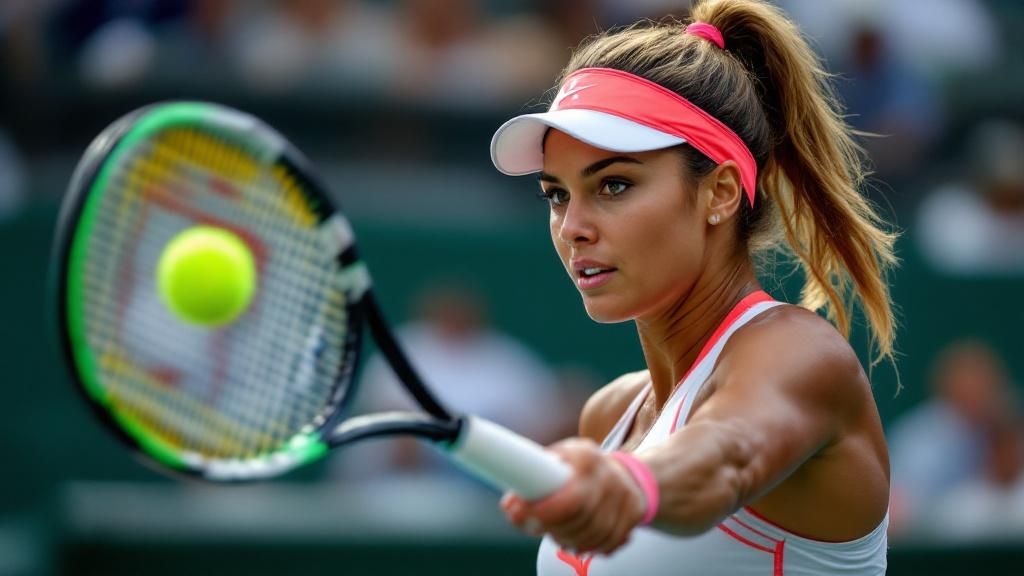
After many years of campaigning for equal recognition, women’s tennis has secured a landmark victory: equal prize money with men’s events at major tournaments. This groundbreaking shift constitutes far more than simple monetary parity; it signals a fundamental transformation in how the sporting world values female athletes. This article examines the extended path towards this achievement, the pivotal moments that catalysed change, and the significant consequences for women’s sport worldwide. Discover how sustained effort and campaigning have finally shattered one of sport’s most entrenched barriers.
A Significant Moment for Equal Opportunity in Elite Tennis
The attainment of prize money parity in female tennis constitutes a pivotal turning point in sports history. For generations, women competitors competed at the highest level whilst receiving significantly reduced financial rewards than their male rivals, despite delivering comparably engaging performances and attracting significant global audiences. This inequality was not merely a financial inconvenience; it represented systemic undervaluation of female athletic excellence. The recent decision by major tournaments to standardise prize distributions acknowledges the outstanding ability, commitment, and market value of female tennis players. This historic shift shows that meaningful change is achievable when key parties embrace genuine equality.
The progression towards equal treatment has been neither swift nor straightforward. Women’s tennis pioneers fought tirelessly across the latter decades of the twentieth century, confronting established prejudices and insisting on acknowledgement. Legendary players such as Billie Jean King became vocal advocates for fair treatment, notably competing in the “Battle of the Sexes” to prove women’s competitive merit. Their bold advocacy created vital groundwork for subsequent generations. However, progress continued to be frustratingly gradual, with competitions resisting reform for prolonged periods. The determination of these pioneers, combined with increasing public backing and changing social attitudes, finally produced adequate momentum to overcome institutional resistance.
Beyond the direct financial effects, prize money equality carries profound symbolic significance for sport at the professional level globally. This landmark sends an unambiguous message: female athletes merit equal pay, recognition, and funding. The step influences views across numerous sports, potentially catalysing similar changes in football, cricket, and athletics. Young women now observe concrete acknowledgement of their athletic potential, fostering greater participation and investment in female sports development. Furthermore, tournament organisers acknowledge that equal prize money enhances the sport’s integrity and commercial viability, benefiting all stakeholders. This achievement extends past tennis, reframing conversations about gender equality in sport worldwide.
The Extended Path Towards Fair Compensation
The campaign for prize money equality in women’s tennis has been a protracted struggle lasting many decades. Female athletes have repeatedly questioned the narrative that their competitions were of lesser value or marketable than men’s tournaments. Despite producing significant TV viewership and sponsorship funding, women’s events attracted significantly lower prize purses. This disparity became ever more difficult to defend as women’s tennis showed its earning potential and global appeal, prompting sustained advocacy from competitors, officials, and backers worldwide.
Throughout the last two decades of the twentieth century, gradual advancement took place at different competitions, yet comprehensive parity remained elusive at the sport’s most prestigious events. The turning point came through persistent campaigning by leading athletes and increasing recognition of the imbalance. Major tournaments increasingly accepted that equal prize money was both a matter of principle and smart commercial decision. The achievement of parity demonstrates justification for numerous competitors who committed themselves to this cause, establishing a precedent that resonates throughout professional sport.
Effects on Players and the Future prospects for Women’s Tennis
The attainment of prize money parity represents a significant moment for female professional tennis players. Beyond the immediate financial benefits, this milestone indicates a profound shift in how society values women’s athletic achievements. Players can now compete with genuine equality, eliminating a major mental barrier that had persisted for generations. This parity allows female athletes to pursue tennis as a sustainable career, attracting greater talent and investment to the sport.
The knock-on consequences of this choice reach well past tennis courts. By establishing equal prize money at the sport’s elite levels, sports organisations have established a powerful precedent for other sports and sectors worldwide. Young girls following women’s professional tennis now see leading athletes pursuing fair financial recognition, fundamentally changing ambitions and professional opportunities. This visibility and validation promote increased participation at grassroots levels, reinforcing the sport’s foundation for decades to come.
- Enhanced monetary protection for leading female players worldwide
- Increased news exposure and commercial partnerships for women
- Increased support of women’s tennis training initiatives
- More prominent examples encouraging the next generation of athletes
- Push towards equal treatment across professional sport generally worldwide
Looking forward, the realisation of equal prize distributions marks merely the start of a wider overhaul in women’s tennis. Tournament organisers must now focus on equal media coverage, venue availability, and promotional investment to ensure true equality. The achievement of this programme shows that systematic change is possible when stakeholders commit to equity. As women’s tennis keeps developing, this monetary landmark will undoubtedly inspire further progress across elite athletics.
